Labels

Thursday, 11 October 2012

Bajaj Discover 150 v/s Yamaha SZR

Which of these 150s is a better bet? 
 
Bajaj Discover 150

1. The 144.8cc, 12.8 bhp, four-stroke motor is exceptionally frugal. Not the most exciting of the bunch in the performance aspect though.  
2. The ride quality of the Discover 150 is more than just adequate, soaking up the bumps and potholes with stuning alacrity.  
3. The build quality of the Discover gives away the fact that this motorcycle is built to a price.  
 4. Styling comes off as quite dated  
5. The Discover 150 could be a much better handler than it is, had it been shod with grippier tyres. 6. Price, ex-showroom, Mumbai - Rs 50,456 .

Yamaha SZR 

1. Although this motor displaces 153cc, it produces only 11.9 horses - the result of a retune of the FZ engine for better fuel consumption for the commuter segment.  
2. Ride quality is at par with the Discover but the Bajaj feels lighter and more nimble than the Yamaha.  
3. Build quality has never been an issue with Yamahas and this one is no exception, although certain bits could have been better.  
4. Although the styling is not exactly conservative, the SZR is pleasing to the eye. But it's about time the trend of those hideous plastic tank extentions comes to an end. And now!  
5. The tyres of the SZ R are adequate and do the job. Push them hard and they'll give up, though.  
6. Price, ex-showroom, Mumbai - Rs 58,663

Hero Moto Impulse vs Yamaha FZ16

Can the new offroader hold its own?  
HERO MOTO IMPULSE

 1. 'Same 149cc motor as the Unicorn?!'. Yes, but 13.02 bhp in an on/off-roader reads much differently than that on a heavier street bike like the Unicorn.      
2. This isn't a Hunk with a motocross front fender. It's a proper, conventional off-roader with all the cycle parts you need to venture into the rough. The front forks are 50mm longer, there's a monoshock at the rear, and it can take to hard off-road riding like no other bike in the Indian market can. Except, perhaps, the BMW R1200 GS - and that's roughly 18 times as expensive!   3. The Impulse is shod with 19" front and 17" rear knobbly tyres - essential in the dirt. This does come in the way of braking on tarmac/concrete but that's something you can work around once you've accustomed yourself to the tyre behaviour. Off-road, the tyres grip well but could have been just a little bit better in terms of feedback. 
4. Because the Impulse is narrow and tall, the sensation of speed is magnified (also adding to that is the minimal wind-deflection). The seat is a full-spec on/off-road number, beginning from well over the curvature of the tank ending in a comfy, if slightly narrow, pillion seat. The riding position takes little time to get used to and is perfect, both, on the road and off it.  
5. Most importantly, because the Impulse is the only one in its segment (we hope the competition catches up soon!), it will stand out in a crowd. The general consensus is that the Impulse is 'cool' and we see a lot of room for various off-road/touring accessories too!  
6. At Rs 66,800 (ex-showroom, Mumbai), the Impulse is sheer bang for the buck and if you're not all about knee-downs, you'll find this motorcycle very interesting. PS. Two dislikes; A few horses more would seal the deal for Hero Moto and there wouldn't be a need for this comparo in the first place. Secondly, we're not impressed with the exhaust note (identical to that of the Unicorn). An on/off-roader needs to sound a bit hardcore, no? 

YAMAHA FZ16

1. The 153cc, 13.8bhp motor on the FZ was never one of its strengths but still showed flashes of brilliance when really given the stick, until which it remained largely relaxed and unstressed. 2. The FZ's chunky styling is still to be beaten by any other motorcycle in its segment and we like the standard, no decals/fairing variant best.  
3. It is shod with exceptionally good tyres, with the 140-section rear also serving as an excellent styling element. While the FZ isn't, obviously, as agile as the R15, it is quite well sprung (monoshock at the rear) which encourages borderline-hooliganistic riding.  
4. The FZ has a very touring-friendly riding position and engine mannerisms to match. Even in traffic, the FZ is an easy, communicative motorcycle and you'd be quite pleased to be astride one. Although, you are warned, the Hunk and CBZ X-treme are perkier, quicker.  
5. The FZ, unfortunately, won't stand out in a crowd anymore. But that's a given, because it's so good looking, everyone has one!  
6. At Rs 71, 250 (ex-showroom, Mumbai) the FZ is VFM in terms of kit, although we know the chassis can handle a lot more horsepower. Oh, and maybe Yamaha should try a slimmer, more supermoto-esque motorcycle on the FZ platform. 

Bajaj Pulsar 200NS Vs KTM Duke 200 - Grilled!

Which of these two is India`s most appetising streetfighter? We have the definitive answer.
Bajaj Pulsar 200NS Vs KTM Duke 200 - Grilled! 
Tandoori chicken has its origins in Peshawar, Pakistan and due to territorial reasons, is now regarded as a fantastic Indian meat preparation. It’s a fiery orange hue, is spicy but not eye-wateringly so, and the meat, prepared elaborately in a tandoor, which is a coal-fired oven of sorts, is particularly juicy. Given the anatomy of a chicken, consumption of the dish in question requires some effort at the dinner table, but it’s part of the experience, really.  

On the other hand is another lip-smacking preparation called butter chicken. A cream gravy prepared around boneless chicken, preferably, and usually paired with soft tandoori rotis – it is, given the varied demography of our country, aspirational food for many, and can’t-go-wrong-with-it food for the rest. Nice introduction to the KTM Duke 200 and the new Bajaj Pulsar 200NS, no? WHAT ARE THEY? Both are streetfighters, competent to the last nut and, needless to say, smashing in the looks department. The Duke looks radical and is a fibre-bodied shout-out to the stunt maniacs of the country. It’ll make a wheelie god out of you if you’re sincere enough – explains why Aneesh (that’s his bike in the shots – mine’s not stock) and I both own one. The Pulsar, on the other hand, is a striking answer to the prayers of the street racers of our country. It’s fast, it’s poised and the fact that I’m comparing what is essentially a ‘Pulsar', a word that’s become synonymous with performance, to a sharp motorcycle from a European powerhouse is proof enough of how much Indian motorcycling has evolved.
Bajaj Pulsar 200NS Vs KTM Duke 200 - Grilled! 
HOW SIMILAR ARE THEY?
Not very. How different can 25.4 bhp (Duke) be from 23.1 (Pulsar)? A lot, and swinging a leg over the saddle is the only way to find out. A large chunk of the 200cc single-cylinder is common to the two, yes, although I will go on to say that this is perhaps the most competitive utilisation of technology-sharing under one roof India has ever seen, perhaps even better than what happens behind the curtains at the Volkswagen Group office. Bajaj, by means of its 47 per cent ownership of KTM, has handpicked the best of resources from either party to create what are, no doubt, two of the most fun bikes you can buy in the country today. The KTM is torquier and more powerful, but uses that advantage early in the powerband. The Pulsar is (and does) the opposite. The KTM is rough and a bit vibey (no handlebar-end weights), while the Pulsar is refined without being numb. You may not necessarily like both, but you will like either. Smart move, Bajaj Auto.
WHICH ONE’S BETTER BUILT?
The Duke is. A lot of the hardware, so to speak, on the Duke’s interface exudes finish levels that are familiar territory to some of the world’s finest motorcycles. If you walk over to a 690 Duke and take a look at the handlebar controls, levers and meter console, you will be surprised to see how similarly built the Duke 200 is. This is something the Pulsar lacks, but that’s a given owing to its much lower price tag. Even across the rest of the motorcycle, the Duke feels a lot more ‘premium’ to the touch. After spending a good few hundred kilometres in the Pulsar’s saddle, the best I can come up with is ‘the Duke feels like a scaled down 690, the Pulsar, a handsomely matured Indian motorcycle'.

Bajaj Pulsar 200NS Vs KTM Duke 200 - Grilled! 


WHICH ONE’S FOR THE STUNT MONKEY?
The Duke has all the right bits – USD forks, a stiff rear monoshock and a riding position that only reaffirms its stunting intentions. The handlebar is a bit high-up – it offers good leverage and unlike clip-ons, won’t break in the event of an outrageous stunt gone wrong. The footpegs grip well and are thoughtfully grooved (makes a massive difference in wet weather – a little bit of muck and my feet would slip dramatically off the Pulsar’s) and the overall feel from the levers and pegs is optimal. Add a wheelie bar to the tail, and you’ll have everything you need to be a YouTube celebrity. The only negatives are the toe-shifter and rear brake lever, which aren’t wide enough, and the handlebar grips, that do come across as a bit hard.

And that’s just the cycle parts. Rev the Duke up and pop the clutch in first – it wheelies with the eagerness of a seventeen-year old wanting to ‘find out more’ about Monica Bellucci. It displays poise no matter which end is up in the air and the better stunters amongst you will find the power graph of the Duke extremely palatable. The Pulsar, too, is hooliganistic, but less intuitively so (its mind is just too much on speed) when compared to the Duke. Give it more gas than your gut feeling allows, followed by a quick pop of the clutch, and the Pulsar will cover a lot of distance before you bounce off the rev limiter in first gear. However, if you think racing is passé, the Duke is what you’re looking for. 
Bajaj Pulsar 200NS Vs KTM Duke 200 - Grilled! 
WHICH ONE’S THE TRACK SCORCHER?
The difference is simple – into the Duke’s chassis, Bajaj has dialled a good degree of communication, while the Pulsar gets a strong dose of effortlessness. So to answer the question I have posed, both are exceptionally focussed around corners, but the Pulsar makes you work less hard. It, hence, boils down to your riding skills. Leaned over into a fast sweeper, the Duke demands 100 per cent of rider commitment, whereas the Pulsar likes to be shown enthusiasm. In the city, the Duke is more game to flicks of the wrist, but through fast, demanding twisties, the Pulsar is more stress-free. That twin-spar frame on the Pulsar, combined with the really good tyres/brakes, makes it one of the neatest handling packages on any Indian motorcycle on sale right now.
Performance-wise, either bike is highly rewarding. On the Duke, things happen with a sense of urgency and if you’re precise with the shifter, you’ll hit the tonne mark in 8.9 secs. On the Pulsar, things are a little spaced out. To hand out the order of speedo indicated top speeds the Pulsar is capable of in each gear, it’s 50, 73, 94, 114, 129 and, finally, 136, beyond which lie a few extra kph that you can gain provided you’re light and have superhuman crouching abilities. I spent a large share of my Pulsar time shifting between third and fifth – extracting all that juice happens best here, and it’s fun. The sixth cog only adds that extra bit of top-end to the Pulsar’s performance but what’s interesting is that it spans roughly 90 kph, considering you can shift into top gear as early as 45 kph. If you want thrills but would rather not work too hard for it, the Pulsar should fit you like a glove. 
Bajaj Pulsar 200NS Vs KTM Duke 200 - Grilled! 
WHICH ONE’S COMFIER?
The Duke is already very (un)popular in enthusiast circles for being punishingly stiff in the suspension department, and having clocked over 3,000 km on mine, I do have some unpleasant stories to tell my grandchildren. Hopefully, it won’t come in the way of me having grandchildren in the first place, if you know what I mean. However, I like stiffly sprung bikes as much as I dislike children, so the Duke suits me. I like the seat – both the cushioning and texture – and the excellent leverage the handlebar provides leaves me largely unstressed at the end of a long ride. The rear monoshock is adjustable for preload, so you can’t dramatically alter the damping characteristics, but the stiffness is only a clear reflection of focus, something the Duke has a lot of.
The Pulsar is stiff, too, but not as much as the Duke. It’s a lot friendlier over bumps and the gas charged rear monoshock performs far better over bad roads. On fast, bumpy roads, you can feel the Pulsar’s suspension working really hard – the Duke just tosses you around, instead. At the end of a fast Mumbai-Pune run on the Pulsar, I was not stressed at handlebar, seat, or footpeg and while the Duke produces the same results, there’s no doubt that the Pulsar is the comfier of the two.
WHICH ONE WILL YOUR PARENTS LIKE?
The Duke’s lineage and country of manufacture ('Austria? Australia? Same thing, no?') is a mystery to many people in our country, despite its popularity with enthusiasts. Your parents may, hence, find an orange Duke easier to digest than a yellow Pulsar. However, if they’re the ones funding it, they might find the thirty thou savings a bit hard to resist and your mother will talk you into some high-on-drama religious pact wherein you will be forced to ride the Pulsar at running-in speeds for the rest of your life. ‘Yeah right', you’ll say, ‘and now you won’t even let me marry my girlfriend...'
WHICH ONE TO BUY?
If you’re reading this paragraph before you’ve read the rest of the story, don’t feel guilty – I’ve been as excited as you are to get to this bit. At Rs 87,514 (ex-showroom, Mumbai), the Bajaj Pulsar 200NS is fantastic value. It’s everything the street-racer in you could ever ask for and overall, is a truly outstanding example of honest, enthusiastic packaging. The KTM Duke 200, at Rs 1.17 lakh (ex-showroom, Mumbai) is substantially more expensive and only just as fast as the Pulsar, but for the premium you pay, you get stuff like USD forks, a very communicative trellis frame, a comprehensive meter console, fuel-injection, smashing looks, and quality and feel that is unmatched by even some more expensive motorcycles.
The conclusion, hence, is about whether you have what it takes to make the most of such enthusiastic machinery. Take your call, while I dig into a plate of tandoori chicken...
If your girlfriend is a regular pillion, she’ll hate the Duke for the damage it’ll do to her spine but she’ll like the attention and the extra shopping she’ll get you to do in exchange for not complaining about it. She’ll also like the fact that the Duke doesn’t spray as much muck up the rear (and hence, her latest pair of GasGas denims), thanks to an elaborate (but not ugly) rear mudguard – something that’s absent on the Pulsar. However, considering you’re a stunter, you might not have too many functional bones left, which might hamper your relationship (more on that, er, never). But being a track guy isn’t a big deal either, since women don’t think too highly of men dressed in leather. I’m going to focus on my wheelies...
Bajaj Pulsar 200NS Vs KTM Duke 200 - Grilled!
 
Competition check
Not streetfighters, these two, but still popular with thrill-seekers are the Yamaha R15 and the Honda CBR 250R. Both sport full fairings and twin-spar frames, and the single cylinder engines of either feel absolutely at home on the racetrack. The R15, thanks to its riding position, comes across as a bit extreme (it’s a wrist-killer, if you plan to spend longer than a couple of hours in the saddle), but the CBR is the larger, comfier of the two.
Despite its relatively small 150cc mill, the R15’s performance is sharp and thoroughly enjoyable. The CBR’s 250cc motor, too, is very involving and the more you push it, the better it gets. If a full fairing is a must-have for you, try out these Jap track tools. 

 TECH SPECS

 KTM Duke 200

 Engine   200cc, single-cylinde  0-100 kph   8.9 secs
 Max Power   25.48 bhp@10,000 rpm  Top Speed   134 kph
 Max Torque   1.99 kgm@8000 rpm  Price   Rs 1.16 LAKH Ex-showroom, Mumbai
 Transmission   6-speed  Fuel efficiency   Overall: 34.5 kpl
 Bajaj Pulsar 200 NS

 Engine   199.5cc, single-cylinder  0-100 kph   11.9 secs
 Max Power   23.17 bhp@9500 rpm  Top Speed   136 kph
 Max Torque   1.86 kgm@8000 rpm  Price   Rs 87,514 Ex-showroom, Mumbai
 Transmission   6-speed  Fuel efficiency   Overall: 39.5 kpl

Hyundai uses cloud server to remotely check vehicle performance

Image: aei-cloudserve.bmp
Hyundai data modem is part of TMU (telematics unit in center) and is tied into the high- and medium-speed data buses so it can monitor most vehicle systems and communicate with a cloud server.
Can the cloud play an important role in the detection and correction of quality and service issues from the instant a car leaves the assembly line and thereafter?
The onboard telematics systems, which are tied into the data buses that monitor and control all key systems on a car, may have more than just a cell phone chip to call a help center for road service. They also may include a modem through which the vehicle communicates with cloud servers.
In addition to infotainment and navigation, telematics already has been providing opportunities for monitoring the condition of a vehicle. But it’s been limited to just a few after-sale service functions, such as General Motors' OnStar with unlocking a car, slowing a stolen vehicle, and issuing vehicle “health reports” and basic trouble code descriptions. Now, other car makers are looking at a wider range of opportunities, although some pose challenges that first must be overcome—and not all are technical.
Hyundai may be the first company to use the telematics modem in its Blue Link system to begin the monitoring process from the instant the car comes off the assembly line and continue it until a customer has taken delivery. And even from that point, if the customer approves, there is the call center report on trouble codes, even a related data transmission to a cloud server for analysis, plus the stolen car slowdown for police pursuit.
The Hyundai system already has yielded results, and the company does see a number of appealing ways to move ahead, explained Erwin Raphael, Director of Product Quality and Service Engineering.
Customer privacy is an issue, and Nissan’s original attempts to monitor the Leaf in operation led to public objections that resulted in deactivation of the extensive vehicle monitoring system. So today, only if a Leaf customer signs an okay, will operational data even be collected, and then it goes only into an aggregating server to spot service issue trends, but without specific vehicle ID. However, Hyundai also has a server with aggregating software but saw some additional opportunities. It has identified where it wants to go in its next-generation system and is working to get around some present limits.

Early warning provided

When a car comes off a Hyundai assembly line, the modem is on, so if a failure has occurred that was not identified in the end-of-line (EOL) diagnostic check, or was triggered during transportation of the vehicle or while it’s in the dealer lot, the notice goes into Hyundai’s aggregating cloud server. This is one of the early-warning systems that Hyundai has put in place to further improve quality, explained Raphael.
As an example, the tire pressure monitoring system on the new Santa Fe was being set for too high a sensitivity, so each car coming off the line would trigger trouble codes for the pressures in all four tires. Although the information went through the aggregating cloud server, the trouble codes tied to a specific car line meant Hyundai was able to realize that something was wrong at the assembly plant and quickly execute a fix.
All new cars go through a Pre-Delivery Inspection (PDI) at the car dealer, but the cloud system also offers the opportunity to perform an electronic PDI (E-PDI), and that is in Hyundai’s plans.
The limitation of the currently possible data collection and transmission system, which is based on OBD II (on-board diagnostics), is that it requires a diagnostic trouble code to generate a message from the modem to the cloud server. However, many codes are accompanied by a “freeze frame” display of sensor readings, called PIDs (Parameter IDs), which can be helpful.
For increased effectiveness, vehicles would have to be started and running for some of the E-PDI tests. That’s feasible because start-and-run often follows E-O-L, driving vehicles on and off the trailers that deliver car to dealers, and for in-dealer operations. Inasmuch as a car still is owned by the vehicle manufacturer prior to delivery, privacy factors have not yet come into the picture. Assuming a dealer did not object, the monitoring could continue until the vehicle was sold, so demonstrators also could be covered, providing another source of vehicle quality information.
At the beginning, a cloud-based E-PDI would probably be used to alert dealers to any issues detected, but as it becomes more robust, it could supplant that aspect of the pre-delivery process.
One useful post-delivery service opportunity would appear to be continuous monitoring of a vehicle with an intermittent problem. It can be done, but to be really useful would require continuous sensor data transmission, rather than just a trouble code and a single “freeze frame” of sensor data. There already are available “flight recorders” easily installed to provide continuous monitoring and record data, so this feature is lower priority.

Reflashing issues 

One seemingly sure opportunity for the cloud connection would be for software updates—reflashing vehicle computers to the latest level of software, particularly to correct driveability and safety issues where possible. It’s probably on every carmaker’s “wish list” because it could save money and ensure critical updates are made promptly.
However, Raphael pointed out, this is the toughest challenge, even if the legal concerns were overcome with releases and remote identification of a viable setting (such as engine warmed up, vehicle parked, etc.). Here the challenges raise both technical and denial-of-use issues, he said, including sizes of the files. Some reflashes are so long that an owner might have to dedicate hours, and although that’s possible with a personal computer, a motorist might become impatient.
Just for openers, the modem and cloud server would have to identify the software level in the car, a shop procedure typically performed with a factory scan tool. Also, reflashing typically requires specified, stabilized voltage to a minimum level, and if the voltage dropped, the reflash likely would fail.
It is possible for a smart charging system to provide that capability and even transmit the voltage data to the cloud server. But to maintain the voltage through an entire reflash, the file size would have to be very small. So some reflashes still would have to go to the car dealer, even if not all.
The system would have to be designed for recovery in cases where a file didn’t load properly or if the motorist had to abort it for a driving emergency. And even if it seemed to go well, there would have to be an absolutely positive verification algorithm, Raphael pointed out. “The current system does not perform reflashes and is not designed to,” he noted.
Here again, the first applications of remote reflashing would likely be done when a car is in the dealer shop for other service. During this period, one of the special battery chargers used to maintain required voltage for reflashing could be connected, and the success of the update could easily be verified. However, verification often is done by a shop scan tool, so a cloud-to-modem equivalent is well within current technology.

GM and Ford join forces on AT development

Image: GM 6T70 fwd 6spd 2013.jpg
Packing more gear ratios into compact front-drive transmission housings is one of the technical challenges facing GM and Ford engineers as they collaborate on future AT development. Shown is a 2013 GM 6T70 6-speed unit, which shares its architecture and much of its bill of materials with Ford's 6F. 
A decade ago, the word "collaboration" was on everyone’s lips as the industry looked for new ways to save cost and speed time to market. Even companies that were arch competitors were joining forces out of economic realism. Collaboration was a pragmatic strategy as long as the shared goals were understood by all involved—and kept clear throughout the process, which could be awkward at first for those charged with making it happen.
"The secret is to gang up on the problem, rather than each other," advised Tom Stallkamp, Chrysler’s purchasing boss who enjoyed the best supplier relations of the Detroit Three during the 1990s.
The 2002 deal between GM and Ford to co-develop a new 6-speed automatic transaxle for front-drive applications turned out to be a landmark in collaborative ventures. It wasn’t easy convincing the large transmission-development groups of each OEM to play nice and work together, but that’s what they did and production began in 2006. Since investing a combined $720M in manufacturing assets to support the new transmission, Ford’s 6F and GM’s 6T70/6T75 have been produced in multiple plants at high volume and quality in nearly 30 vehicle applications to date.
As SAE readers know, creating and producing new transmissions is one of the most expensive activities in product development. Experts in this area tell me an all-new planetary automatic will cost approximately $90M in ER&D, plus another $600M to $700M for production equipment able to handle output of 500,000 units per year. And if you need new bricks and mortar, add $200M. There’s not much change left from a billion dollars. And PD costs are expected to continue rising as the transmissions themselves become ever-more sophisticated.
That’s why the news that GM and Ford are again collaborating in the transmission-engineering arena is important. By the time this SAE Technology eNewsletter reaches you, the two automakers will be close to officially announcing their joint studies, development, and potential manufacture of a variety of new fuel-efficient transmissions. Independently GM and Ford have been investigating and developing new 8-, 9-, and 10-speed automatics for front- and rear-drive car and truck applications. Perhaps the units farthest along will be completed as joint programs. Perhaps clean-sheet designs that combine the best ideas from each OEM are already under way. (When this article was written in late September, there was no word on how intellectual property will be addressed.)
Either way, the new GM-Ford collaboration limits both companies’ risk exposure while increasing the mutual benefits in production. Rather than having to purchase licenses from third-party powertrain suppliers as some competitors are doing, the world's second- and fourth-largest OEMs are maintaining this “core” powertrain technology in-house. Their combined scale will put considerable cost pressure on competitors. Their engineers again will have to “gang up” on the challenges ahead.

Friday, 5 October 2012

2013 BMW R 1200 GS Looks Awesome

BMW seems to celebrate the 9th production year for the R 1200 GS model. The 2013 beast brings together the best the German manufacturer has to offer at the present time, all in a good-looking package which promises extraordinary fun and solid performance.

The next year's R 1200 GS brings a heap of new stuff, from the minute modifications to the major ones. For starters, we should note that the engine has been redesigned: the same opposed-boxer unit, but with a vertical coolant (glycol-water instead of oil) flow-through channel system and integrated gearbox. Already raised an eyebrow, huh?

Well, hang on, for there's so much more! The cardan shaft is now on the left side, so we're already looking at a different bike. The 2013 R 1200 GS blasts 15 bhp more than its one year-old father and now reaches 125 bhp @ 7700 rpm.

Enter the anti-hopping 6-gear wet clutch as opposed to the dry clutch used so far! And with less weight, things sound even better: the new R 1200 GS weighs now 525 lbs (~237kg) dry. And since the new big GS is not meant only for Mongolia, you get no less than 5 riding modes: "Rain", "Road", "Dynamic", "Enduro" and "Enduro Pro". Each mode comes with its own electronic throttle actuator and dynamic update for the ASC (Automatic Stability Control) and ABS.

The rear disc is now 11 mm wider, with a diameter of 276mm, while the ABS is stock. LED lights with daytime function are also present, like are the adjustable windshield and seat. Semiactive suspension is also standard. One thing will make enduro riders not so happy: the 19-inch front wheel. No matter who would claim the contrary, 21" front wheels are the classic way to go for enduro bikes and it would be little surprise when some potential clients will look into other bikes.

The specs above have been announced for the European market, with prospects of slight differences for the US . Pricing is still yet to be announced.
2013 BMW R 1200 GS in red


A new dashboard for BMW R 1200 GS in 2013
The 2013 R BMW 1200 GS exhaust looks sportyLED Headlights for 2013 BMW R 1200 GS Lots of functions at your fingertipsThe new 2013 BMW R 1200 GS engineThe 2013 BMW R 1200 GS comes with glycol-water cooling and vertical flow-throughBlue version of 2013 BMW R 1200 GS

Ducati Shows 2013 Multistrada 1200

Ducati Shows 2013 Multistrada 1200Great news for the Ducati fans come from Bilbao, Spain, as the new Multistrada has just been launched. The 2013 model packs a lot of top-drawer features which will simply enthrall the fans, but leave a burning hole in their bank accounts as well.

Now, all the great machines come with rather steep prices, and that's no news. What's really new and exciting is the fact that the Audi-owned company has managed to add a lot of nice features on the old platform and the next year's bike is indeed a major fun machine.

The 2013 Multistrada's heart is the brutal Testastretta 11° engine which now delivers with up to 5% more torque and sports a smoother feel thanks to the repositioned injectors, dual spark plugs, additional air intake system and different ignition mapping.

The three S models are equipped with the Ducati Skyhook System (DSS), which promises better contact between bike and road, thanks to the intelligent damping adjustment, keeping the Multistrada in better balance.

The Ducati Traction Control (DTC) system receives info from the front and rear accelerometers and makes necessary amends to the whole dynamics of the bike, ABS and all. The Bosch Brembo ABS is a lightweight state of the art one, delivering unrivaled performance to both front and rear brakes; it features the same processor like the one to be found on the 1199 Panigale model.

The 2013 Multistrada boasts no less than 4 riding modes: Sport (150 bhp direct), Touring, Urban and Enduro, the latter three with an even spread of the available 100 bhp, ensuring optimal traction and fuel consumption in any riding scenario.

As for the rest of the enhancements, we should also note the larger, on-the-fly manually-adjustable windshield, LED headlights and position lights, dedicated connector for an optional Garmin GPS. The Ride-by-wire throttle is stock, as is the hands-free proximity ignition. Rumor goes that the price tag for the new Multistrada 1200 top model could read as much as 23,000€ ($29.700) in Europe. Stay put for official pricing in the US soon.

❐ Check out the 2013 Ducati Multistrada 1200 photo gallery
 
 Ducati Multistrada 1200 sports 4 riding modes
 
Classic smooth lines for Ducati Multistrada 1200

Wednesday, 3 October 2012

Higher-volume vehicle gets carbon-fiber body panels produced in less time


Image: 2013-Chevrolet-Corvette-ZR1.jpg
The current production Chevrolet Corvette ZR1 (shown) features carbon-fiber fenders, roof, roof bow, hood, air splitter, and rocker panels supplied by Plasan.

While not every body panel on an upcoming vehicle will be carbon fiber, its usage marks a milestone.
“It will be the first time that carbon fiber has been used this extensively on a base production car anywhere in the world,” Gary Lownsdale, Chief Technology Officer of Plasan Carbon Composites, told AEI.
A secrecy agreement prevents Plasan officials from naming the vehicle or the automaker, but details about the vehicle will not stay under wraps indefinitely. January 2013 marks the start of body panel production at Plasan’s new 200,000-ft2 (18,600-m2) facility in Walker, MI.
“We’ve been molding parts at our Wixom, MI, R&D center, which has two of the new pressure presses. We’re moving one of those presses to the Walker facility and adding five more pressure presses by 2013,” Lownsdale said, adding the new facility has the capacity to house 12 pressure presses.
The novel pressure press technology shatters the 90 minutes needed by Plasan to mold a body panel with autoclave processing. Materials processing time with the pressure press is a 17-min machine cycle.
“It took us about a year and a half to synthesize fully the process of what happens inside the autoclave. But once we were able to find out exactly what happens physically and chemically inside the autoclave at discreet time increments, that enabled us to plot a whole new thermal dynamic curve and a whole new pressure curve with our patented pressure press technology,” said Lownsdale.
A provisional patent addresses the entire process while eight separate pending patents involve Plasan as well as the equipment provider Globe Machine Manufacturing Co. of Tacoma, WA.
The new process applies up to 150 psi (10.3 bar) of surface pressure at up to 450°F (232°C).
Plasan’s cure cycle can be as low as 7 min, depending on the resin formulation. (Technical specialists at Plasan have achieved a 2-min cure time in the lab by producing an 18-in (457-mm) long, 6-in (152-mm) diameter cylinder made of thermoplastic resin.)
Like Plasan’s other carbon-fiber body panel production applications, the same thermoset epoxy-based resin will be used for several of the new base vehicle’s exterior panels, including the hood, fenders, and roof.
“The density of the carbon fiber components is the same as our current autoclave production parts,” Lownsdale said. “Weight savings for all of the components will be similar to what was achieved on the current Chevrolet Corvette and SRT Viper production programs.”
Carbon-fiber body panels on the future vehicle will be a combination of exposed weave and painted finish.
“There are some new components with unusual shapes that required innovative mold tooling. We developed removable sections of the mold tools to attain detailed design shapes for fine character line definition in order to meet the stringent design studio requirements,” explained Lownsdale, who cannot reveal the specific components.
Plasan’s new production center and its equipment represents a $30 million investment. The company initially will employ 202 workers, including 20 engineers, at the production facility.
Providing body panels for a medium-volume production vehicle is just a first step for Plasan.
“We’re processing carbon fiber with a breakthrough piece of technology. It’s not RTM (resin transfer molding), and it’s not autoclave. It’s something entirely new. Our 10-year plan calls for the development of breakthrough technology every three years. This is just the first of what’s to come,” said Lownsdale.

Deere releases a faster, more powerful Gator

Image: rsx850i_sport_action.jpg
All RSX850i Gators come equipped with an 839 cc, V-twin, liquid-cooled, four-cycle gasoline motorcycle engine that produces 62 hp (46 kW) and a top speed of 53 mph (85 km/h).
With the RSX850i, John Deere enters the recreational utility vehicle category with an all-new Gator that was engineered to be faster, more powerful, and more agile than any Gator ever built.
Deere first created its AMT (all materials transport) in 1987, which it claims as the launch of the entire utility vehicle (UV) category, and the first Gator UV in 1992. It says the addition of advanced power, high top speed, and precision handling are integral parts of the current evolution of the Gator line of utility vehicles.
There are three RSX models—the Gator RSX850i Sport, the RSX850i Trail, and the Base RSX—all designed in collaboration with engineering consultants with expertise in Formula One and NASCAR. The Sport model was designed for harsh desert and rocky, sandy terrains and includes sport seats, alloy wheels with Maxxis tires, Prerunner bumper, cargo box rails, sport steering wheel, and Fox 2.0 Performance Series shocks.
The Trail model was developed with hunting, fishing, and back country trails in mind. It features sport seats, alloy wheels with Maxxis tires, winch, front brushguard, 2-in (50-mm) front receiver hitch with recovery loops, rear bumper, and cargo box rails. The Base RSX can be modified and personalized with factory-installed options. And all three can be well appointed with over 70 available aftermarket attachments.
All models come equipped with an 839 cc, V-twin, liquid-cooled, four-cycle gasoline motorcycle engine that produces 62 hp (46 kW) and a top speed of 53 mph (85 km/h). The engine also delivers 0-30 mph (0-48 km/h) acceleration in three seconds.
Advanced electronic controls and a fuel-injection system supply enhanced starting, idling, and throttle response during operation. In addition, the closed-loop system offers dependable performance at high altitude and hassle-free cold weather starting (tested to -20°F, or -29°C). The RSX also incorporates a large 7.4-gal fuel tank.
RSX Gators are equipped with a unique four-wheel independent suspension for what the company says is "an unparalleled ride" over challenging terrain and precision handling through corners. A dual, wide-arch A-arm design delivers maximum front-wheel control, precise steering, and 10.3 in (262 mm) of ground clearance. An exclusive Multi-Link semi trailing arm independent rear suspension features 9 in (229 mm) of wheel travel and moves wheels rearward in compression, lowering the impact of terrain and improving ride.
Exclusive aluminum body monotube Fox shocks are standard on the Base and Trail models. While Fox 2.0 Performance Series shocks with full spring and compression adjustability come standard on the RSX Sport, they are available for aftermarket upgrade on the other models.
Easy entry and exit from the RSX850 is the benefit of "an industry first" automotive-style door for the operator and passenger. Side-by-side 35.5-in (902-mm) high-performance sport seats combine proven off-road riding experience and automotive styling to enhance driver confidence and comfort.
Deluxe high-back bucket seats on the Base model are positioned to provide ample legroom, with large headrests for support during aggressive driving, and all seats tilt forward for ease of service and to keep dry during outdoor storage. In addition, the RSX features an ISO-certified ROPS (roll-over protective structure) with three-point seat belts and multiple passenger-side grab handles.
Best-in-class sealed storage includes 1.82 ft³ (0.05 m³) of space in the glove box and under the hood, with additional storage in the center console and cup holders. An easy-to-read digital instrument panel displays a system diagnostic light, engine oil pressure light, park break light, seat belt indicator light, fuel level, and a four-wheel-drive indicator, among other vehicle gauges.
A high-density, 8.9-ft³ (0.25-m³) polyethylene composite one-piece cargo box has rounded inside corners to ensure material removal when tilted and has a 400-lb (181-kg) payload capacity. The tailgate can be opened or removed for easier cleanout and to carry longer items. Deere says it features "truck-like performance and can be operated with one hand." The dumping mechanism is as simple as lifting a lever. Integrated tie-down points offer increased versatility and are incorporated in all four corners, on multiple points along the side walls, and via tie-down bars on either side of the cargo box.

A swifter shifter for truck transmissions

  Image: Synchronizer diagram Hi-res.jpg
Oerlikon Graziano claims a number of improvements for its new heavy-duty truck tranmission synchronizer.
Transmission specialist Oerlikon Graziano of Italy has developed a new family of synchronizers for heavy-duty truck transmissions, designed to speed up gearshifting and deliver improved fuel consumption. This is the company’s first component for heavy truck transmissions, having gained experience in the agricultural and construction machinery sectors.
The first applications will be for nine- and 14-speed transmissions. The company claims that the new synchronizers will reduce fuel consumption and emissions in two ways—by minimizing the torque interruption and reducing the steady-state drag torque in the transmission.
Many European heavy-duty transmissions are now automated, but according to Andrea Serra, Product Manager, Synchronizer and Power Shift Design, Oerlikon Graziano, most of the heavy-duty truck transmissions under development in Europe, India, and China are manual transmissions. “We have developed these new synchronizers specifically for manual transmission gear change functions. There is also an automatic synchronizer for the high/low range change function.”
Although Oerlikon Graziano has signed supply deals to transmission manufacturers, no further details are available at the moment.
The synchronizers are set up in single- and double-cone arrangements, all sharing the same external geometry. Construction is from molybdenum coated steel cones offering torque capacities of up to 18,000 N·m (13,276 lb·ft). Oerlikon Graziano is also considering the use of carbon coating. The company says that the integrated activation system of the synchronizers is key to reducing the large differences in their relative rotating speeds. Four different synchronizer specifications are used on the 14-speed transmission and three on the nine-speed.
The company says that the synchronizers improve the shift over the three phases of a gearshift. Before synchronization, the integrated activation system is said to optimize the load characteristics, giving improved consistency and durability. The multicone technology is said to shorten the synchronization phase, while the sliding sleeve travel is said to be smoother, reducing balking.
Oerlikon Graziano is best known for its transmission synchronizers for agricultural machinery and also produces similar equipment for construction machinery. The company plans to expand further into the truck sector, following the launch of these new synchronizers.

Thursday, 27 September 2012

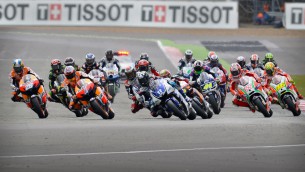
FIM releases provisional 2013 MotoGp calendar

The FIM has released the provisional calendar for the 2013 MotoGP™ World Championship with a total of 19 rounds to take place.

31 March – Qatar* Doha/Losail
14 April – TBC TBC
21 April – TBC TBC
05 May – Spain(STC), Jerez de la Frontera
19 May – France, Le Mans
2 June – Italy, Mugello
16 June – Catalunya, Catalunya
29 June – Netherlands**, Assen
14 July – Germany, Sachsenring
21 July – United States***, Laguna Seca
18 August – Indianapolis, Indianapolis
25 August – Czech Republic, Brno
01 September – Great Britain, Silverstone
15 September – San Marino & Riviera di Rimini, Marco Simoncelli Misano
29 September – Aragón, Motorland
13 October – Malaysia, Sepang
20 October – Australia, Phillip Island
27 October – Japan, Motegi
10 November – Valencia, Ricardo Tormo-Valencia
* Evening Race

** Saturday Race

*** Only MotoGP class

STC (Subject to the Contract)

TBC (To be confirmed)

Tuesday, 25 September 2012

Materials lead the way to vehicle mass reduction

Image: 2013 Cadillac ATS materials.jpg
AHSS as well as aluminum are used in the body structure of the 2013 Cadillac ATS.

The lightweight materials menu features metals and non-metals, yet the selection process is not a one-size-fits-all solution. Without question, every lightweight material choice matters, especially with the industry working in overdrive to meet the U.S. federal mandate for a 54.5-mpg fleet average in the 2025MY. That’s in addition to a bevy of other upcoming governmental fuel economy and CO2 emissions regulations around the globe.
Jeffrey Moyer, Vice President of Business Development & Engineering at Meridian Lightweight Technologies, said the reality is that only two critical model-year life cycles remain for automakers to reach the 54.5-mpg requirement.
“That means the industry needs lightweight, production-ready solutions for the next vehicle cycle,” Moyer told attendees of the Global Automotive Lightweight Materials event presented by American Business Conferences in Troy, MI, on Aug. 21-22.
Meridian’s current die-cast magnesium production application list includes instrument panels, transfer cases, lift gates/closures, front-end structures, steering wheels/steering columns, as well as seat structures.
While calorie cutting is important for all vehicle parts, the body-in-white is a major target.
According to Stephen Logan, Senior Technical Specialist for Advanced Lightweight Programs, Materials Engineering at Chrysler Group LLC, “in order to meet the challenges of increasing fuel economy and reduced greenhouse gas emissions, the body must play a critical role in vehicle weight reduction.”
Scott Miller, General Motors’ Global Director of Mass, Energy, and Aerodynamics, said a vehicle’s typical subsystem mass distribution is led by the body (37%), followed by the chassis (30%), powertrain (14%), interior (12%), electrical (4%), and HVAC and powertrain cooling (3%).
Recent lightweight material examples include a body structure prototype. Based on the 2003 Chrysler Sebring, this magnesium-intensive body structure—after an adhesive cure—weighed just 399 lb (181 kg). Lightweight production vehicle examples include the current all-aluminum bodied Jaguar XJ and the 2013 Mercedes-Benz SL550 roadster.
The SL550 uses Novelis-supplied aluminum for the doors, hood, and various structural pieces, including the transmission tunnel that is made from a new aluminum alloy, Anticorodal-300. At 560 lb (254 kg), the aluminum body is approximately 300 lb (136 kg) lighter than the predecessor.
Ganesh Panneer, Novelis’ Director of Sales & Marketing, Automotive Products, said aluminum usage on vehicles around the globe is projected to increase. Industry sources indicate that when comparing 2011 to 2016, aluminum hoods likely will jump from 11% to 15%; rear gates from 2% to 4%; doors from 1% to 5%; roofs from 1% to 2%; and structures from zero to 2%.
“We’re also seeing A- and B-segment vehicles using aluminum, so aluminum usage is moving to the smaller segments,” Panneer said.
Carbon fiber’s production applications have included roofs, hoods, and other Class A surfaces on low-volume sports cars. But an upcoming global production vehicle will have 75% of its body (including the hood, fenders, and roof) comprised of carbon fiber.
“It will be the first time that carbon fiber has been used this extensively on a base production car anywhere in the world,” said Gary Lownsdale, Chief Technology Officer of Plasan Carbon Composites. The key enabler for this up to 50,000-units-per-year vehicle application is Plasan’s patented Pressure Press processing technology.
In terms of current production vehicle applications, steel reigns as the dominant material choice with advanced high-strength steels (AHSSs) gaining steam, especially for crash management.
Industry projections indicate that in 2015, AHSS will account for 34.8% of body and closure content, with mild steel at 29%; bake hardenable and medium HSS at 23.5%; and conventional HSS at 10.2%. Aluminum and magnesium are predicted to be at 2.5%.
Development of third-generation AHSS is under way. The U.S. Automotive Materials Partnership (a research consortium of Chrysler Group, Ford Motor Co., and General Motors) and the Auto/Steel Partnership are the backbone of a four-year project that will use $6 million in funding from the U.S. Department of Energy.
According to Ronald Krupitzer, Vice President Automotive Market for the Steel Market Development Institute, the first phase of the project—which could begin as early as December 2012—will focus on applying the existing material modeling tools.
“The validation of the integrated materials model and the evaluation of the materials performance in vehicle components via CAE methods as well as materials coupon testing will be the major objectives of phase two,” Krupitzer told SAE Magazines.
Research work done by NASA could lead to new automotive applications within the next five to 10 years. Gregory Peterson, Senior Technical Specialist for Lotus Engineering, told SAE Magazines that many of the technical papers written by NASA experts contain information that is highly valued as potential lightweight solutions for further reducing vehicle weight.
“NASA has been developing space-age materials for decades. And some of those materials are now commercially available through NASA as the technologies are no longer proprietary. We’ve had numerous meetings and discussions with the NASA team, and we’re moving forward in several different areas to potentially commercialize these products for passenger cars and trucks as well as for military vehicles,” said Peterson.
Nigel Giddons, Chief Vehicle Architecture Engineer at Tata Technologies, is leading a team tasked with designing and developing a passenger vehicle with a “weight target that is aggressive at this stage in the project.”
The job is indicative of what engineers are being asked to do on other vehicle programs, Giddons told SAE Magazines.
“It’s an all-point challenge at the moment. That challenge is dictated by legislation, but also in most instances it’s the customers who are demanding more fuel efficient and environmentally friendly vehicles. And, weight and powertrain stand together as a means to that end,” Giddons said.

GM tools up for high-volume aluminum structures with new welding technology

Concentric rings on the domed electrode tip (image at right) are key to the effectiveness of the aluminum resistance-welding technology. GM owns IP around three concepts: the electrode design, the controls for the electrical current, and the technology for dressing the tip intermittently.
Image: GM Aluminum Welding.jpg
General Motors is preparing to significantly increase its use of aluminum in vehicle body structures with a new twist on an old joining technology: resistance spot welding. The automaker is expanding use of what GM engineers claim is an industry-first aluminum spot-welding process that features a new type of electrode developed and patented by GM R&D.
The technology is designed for much higher production rates than are currently employed in automotive aluminum-structures manufacturing. It centers on a new electrode-tip design that will enable GM’s global body shops to spot-weld virtually any combination of aluminum sheet, extrusions, and castings, according to Blair Carlson, Lab Group Manager, Lightweight Materials Processing Group, GM R&D.
“No other automaker is spot-welding aluminum body structures to the extent we are planning to, and this technology will allow us to do so at low cost,” he said.
By increasing its use of aluminum spot welds per vehicle, GM expects to eliminate nearly 2 lb (0.9 kg) of self-piercing rivets from aluminum body assemblies including doors, hoods, and liftgates.
Using rivets to join aluminum pieces adds up-front cost, while complicating end-of-life recycling efforts. Rivet-gun operating limitations also restrict the joint configurations that can be employed in a structure.
GM also aims to commercialize the welding technology. “We’ve got a good handle on it in our internal production, and we’ve licensed it to the GM suppliers for upcoming programs,” Carlson told AEI. “Now we’re taking the next step to license it externally for non-GM production” which he expects to include heavy truck, railroad, and aerospace applications.
GM owns a suite of intellectual property around three concepts: the electrode design, the controls for the electrical current, and the technology for dressing (cleaning) the electrode tip intermittently, Carlson said.
The resistance-welding technology has been in use on select hood (Cadillac CTS-V) and liftgate (hybrid versions of Chevrolet Tahoe and GMC Yukon) applications since 2008. GM’s invention is the unique design of the electrode tip. Its concentric domed rings (see accompanying image) break through the aluminum oxide layer contained on all aluminum parts.
“That layer is the bane of aluminum welding,” Carlson explained. “The rings allow the electrode to engage the surface of the material so that current passes more easily and generates a weld nugget in the middle, centered between the two parts,” he said.
The process is not affected by material gauge and has demonstrated improvements in process consistency and electrode life since it entered volume production. Carlson recalled GM’s implementation: “Basically the ME [manufacturing engineering] guys wanted us to do due diligence, so we took the recommended practices of The Aluminum Association for weld schedules and electrodes and did process windows vs. our technology. We published this in an earlier sheet-metal conference paper.”
The new electrode tip design gives a larger and more robust weld process window, with much tighter consistency than with conventional aluminum spot welding, Carlson noted. “We don’t have traditional issues such as the sheet metal sticking to the electrode, which usually means the welding cell will stop and the operator has to go in and check it out. We avoid all of those interruptions in production.” GM uses MFDC (mid-frequency direct current) in its aluminum fabrication operations.
Jon Lauckner, GM’s Chief Technology Officer, views the technology as a strategic asset. “The ability to weld aluminum body structures and closures in such a robust fashion will give GM a unique manufacturing advantage,” he said in a statement. “It is an important step forward that will grow in importance as we increase the use of aluminum in our cars, trucks, and crossovers over the next several years.”

Hydroformed pillars are world’s first in 2013 Ford Fusion

Image: 2013 Fusion B-pillar steels 1.JPG
2013 Ford Fusion B-pillar and A-pillar roof rail (shown in blue) laid bare on a display buck. The orange stampings are DP780 coated advanced high-strength steel formed using a transfer die process. The green component behind the vertical tubes are in HSLA, CR300/340LA. (Lindsay Brooke)
Ford’s 2013 Fusion uses hydroformed steel tubes for its B-pillars, an application that Ford body engineers claim is a production world’s first for hydroformed components. The car also features a hydroformed A-pillar roof rail.
Using hydroforming instead of hot-stamped welded sheet to create the car’s roof-pillar structure reduced mass, saved cost, reduced the bill of material, and helped improve the new Fusion’s crash performance, said Shawn Morgans, Ford’s Technical Leader and Global Core Manager, Body Structure, Closures, and Body CAE.
“The benefits we’re getting from using a closed continuous section, including giving us better structural continuity throughout the pillars, are driving big improvements to our body structures,” Morgans told AEI. He said in developing the Fusion pillars, his team uncovered no other similar production applications featuring hydroformed tubes.
Ford is driving increased use of hydroformed components across its global body structures going forward, Morgans said. The new C/D-segment Fusion sedan is built on Ford’s new CD4 architecture developed by Ford Europe. It replaces the seven-year-old Mazda G-derived CD3 platform used on the previous-generation Fusion. The CD4, which also underpins Lincoln’s new MKZ, is a predominantly steel structure featuring a high level of high- and ultrahigh-strength alloy content. It is claimed to be stiffer in torsion and bending and more mass-efficient than the former platform.

Proven on F-Series programs

Morgans said the genesis of the Fusion pillar designs came in 2003, during development of a new front end for the F-250 pickup.
“In that first go-around we took our front structure from 18 stampings down to 9 components, including the hydroforms,” he recalled. “We also had a big reduction in spot welds, and we found that we could reduce the mass significantly—the first design was about 42 kg and by the third generation, which ended up on the F-150, we were down to about 26 kg.
“Based on that work, we realized there are huge benefits in using hydroform, so we started to push the envelope,” he said. A hydroformed A-pillar roof rail for the P415 program (2009 F-150) followed, again bringing significant mass savings with lower variable cost.
At the time, Ford had separate Truck and Car engineering groups. Since the groups were combined under one vehicle-engineering organization, the hydroforming “book of knowledge” has been shared across the body-on-frame and unibody teams. Morgans’ boss, Chief Engineer Bruno Bartholemew, has been pushing the teams to advance the technology.
“Bruno’s a very thorough engineer who understands that closed sections and continuous structures are much better than what we were getting by welding a bunch of sheet-metal stampings together,” Morgans explained. The next major hydroform application—the 2011 Explorer front rail—enabled a 5-kg (11-lb) weight-save on that vehicle.
On the Fusion program, the initial direction was to take the F-Series design for the A-pillar roof rail and get it into a unibody. Compared with the truck application, the sedan’s design is slightly modified because the load requirements are different than what the truck sees due to its separate frame. Still, much effort went into it, and the team was able to pull 4 kg (8.8 lb) out per vehicle using hydroform, compared with a hot-stamped design.
“We replaced two hot stampings and some other high-strength stampings, with the two hydroformed tubes in DP1000. This enabled the mass reduction as well as a significant cost save,” Morgans said. The concept was brought forward by a colleague who developed it working nights at home. “He brought it in and sold us all on the benefits,” Morgans noted.
The hydroformed parts are supplied by Cosma International, an operating unit of Magna International, for North American production.
The hydroformed B-pillar enabled Ford to improve the Fusion’s side-impact performance significantly over the hot-stamped design that was originally intended for the vehicle, Morgans said. The tubes give much less deformation and overall better control over the deformation—which helped improve the car’s roof-strength numbers as well.
“If you meet the IIHS [Insurance Institute of Highway Safety] side-impact requirement, the 4X roof crush test is very, very close. It didn’t take a whole lot more to get up to the 4X,” Morgans said. In the test procedure, a metal plate is pushed against one side of the vehicle’s roof panel at a constant speed. The roof must withstand a force of four times the vehicle's weight before reaching 5 in (127 mm) of crush.
“Tubular structures definitely help here,” he asserted. “We maximized the sectional values within the package space we’re given. When you eliminate the weld flanges you get more usable structure out of the components, as well as greater continuity—without the weld joints between the A-pillar and the roof rail. Typically that’s four parts coming together so you get those joints staggered around. And depending on how the vehicle’s built, you don’t always get the ideal connection between those two.”
He explained that because the hydroform tube runs all the way through, there is no discontinuity in the structure. It’s a much better load path.

Laser welding = better joints

The ability to combine parts and moving away from the hot stamping process brought “significant cost benefits,” Morgans said. Hot stamping is time-consuming due to the time it takes to heat up the blanks as well as post-treatment of the parts including using a laser to trim edges. “We were able to get rid of that with the hydroforming,” he said.
Ford has moved to some single-side joining operations in its assembly plant body shops. For the hydroforms, the company is using some stamped brackets to make the transition from the stampings to the hydroform tube.
“Typically on the F-Series we would MIG-weld those on to the tube and then use that stamping as the interface to the other stampings in the structure that allow us to use spot-welds within the plant,” Morgans explained. “For the Fusion, we took a step forward—all the brackets have been laser-welded on, and the brackets we’re using are primarily for tube-to-tube connections. They’re all laser welded and they’re giving us better joints. That’s allowed us to eliminate a number of the holes that would have needed to be there.
“And the process allows more welds within a given cycle time than is typically possible with a spot welding or MIG-weld system.”

Dassault Systèmes delivers tools to develop smart, safe, and connected cars

Image: SSC - Electrical Engineering.JPG
Electrical engineering systems and harness design is part of Dassault Systèmes' 3DExperience it calls Smart, Safe, & Connected.

There was a time when software companies delivered products with a list of features and tools—the more, the better. The problem with that approach for Dassault Systèmes (DS) is that the company evolved from a CAD provider famous for its CATIA 3-D design software into a comprehensive provider of product lifecycle management (PLM) solutions. It has progressed from Digital Mock Up (DMU) to diversifying into manufacturing simulations (DELMIA), virtual simulations (SIMULIA), and other software for visualizing, simulating, and managing product development.
Each of these solutions now needs to talk to each other in an integrated way to deliver real value to specific industry segments, such as automotive or aerospace. Since PLM tools now enhance, even encourage, greater collaboration between functional groups—think design working with manufacturing—each must contribute to a specific, sometimes nebulous "solution." What to call it?
Enter the 3DExperience platform that provides a single product view within an integrated environment for collaboration. For those familiar with the separate brands of DS, it combines 3-D modeling, simulation, data management, and social media collaboration. This 3DExperience evolved from the V6 platform that emphasized accessing a single data model by the company’s different software tools. DS tailors specific experiences to the needs of industry segments, emphasizing a customer-centric view.

Automotive 3DExperience and AUTOSAR and ISO 26262    

One of the first of these industry specific 3DExperiences DS labels "Smart, Safe, & Connected.” It aimed it squarely at the problems of the automotive world. “Our customers told us quite frankly that they need help fulfilling the Automotive Open System Architecture (AUTOSAR) standard and the new ISO 26262 Electric/Electronic functional safety standard,” said Paul Silver, Global Transportation Program Manager, DS. Current and future customers wanted an automated means of proving their systems are both AUTOSAR and ISO 26262 compliant, according to him. ISO 26262, a functional safety standard, requires complete process documentation, analysis, and verification, a task ripe for automation. Since ISO 26262 involves traceability and liability issues, it is a compelling priority.
Why do they emphasize software and electronic systems in their Smart, Safe & Connected Car? “Electronics and software currently represent over 80% of vehicle innovation, with much of that focused on active or passive safety, entertainment, and performance,” stated Mike Lalande, Global Transportation Consultant, Dassault Systèmes. “There is three times as much code as in the Mercedes Benz S-Class as in the F-22 fighter.” Such preponderance in software has unfortunately led to many warranty issues as well as cost and expense in developing, testing, and validating.
Other priorities that were added to Smart, Safe & Connected, according to Lalande, include:
• Electrical engineering (systems and 3-D harness design)
• Electrical and electronic architecture definition
• Passive and active safety, especially Active Driver Assistance Simulations
He notes the passive and active safety functionality features SIMULIA CAE capabilities to simulate such things as restraints and outcomes as well as crash and crush zones. “Our electrical and electronic architecture offerings are based on our success with the BMW AIDA project,” said Lalande.

The future includes more 3DExperiences

Look for more 3DExperiences in the future—Smart, Safe, & Connected is the first of five to be released, according to Silver. Intended to be scalable solutions, DS intends to offer such packages of features that customers can choose only what they need. “Think of an experience such as Smart, Safe, & Connected as bundled solution options that can combine a software product, a service, and [industry-specific] content all in one,” explained Silver.
 For more information on ISO 26262 see: http://video.sae.org/11216.